National Food Bank Day is a chance to raise awareness that there are still millions of people using food support every day in the UK. While the 5th of September is ‘Food Bank Day’, it’s important to remember that people face food insecurity all year round, not just on one day of the year.
In Lewes District there are at least nine projects supporting a total of more than 500 households on a weekly basis to access food, hygiene products, nappies and other essential items. Some households find that their budgets just don’t stretch far enough, and it is common to hear about people going without meals, not eating fresh produce, selling belongings to put food on the table, and having to live with the impact this all has on their mental health.
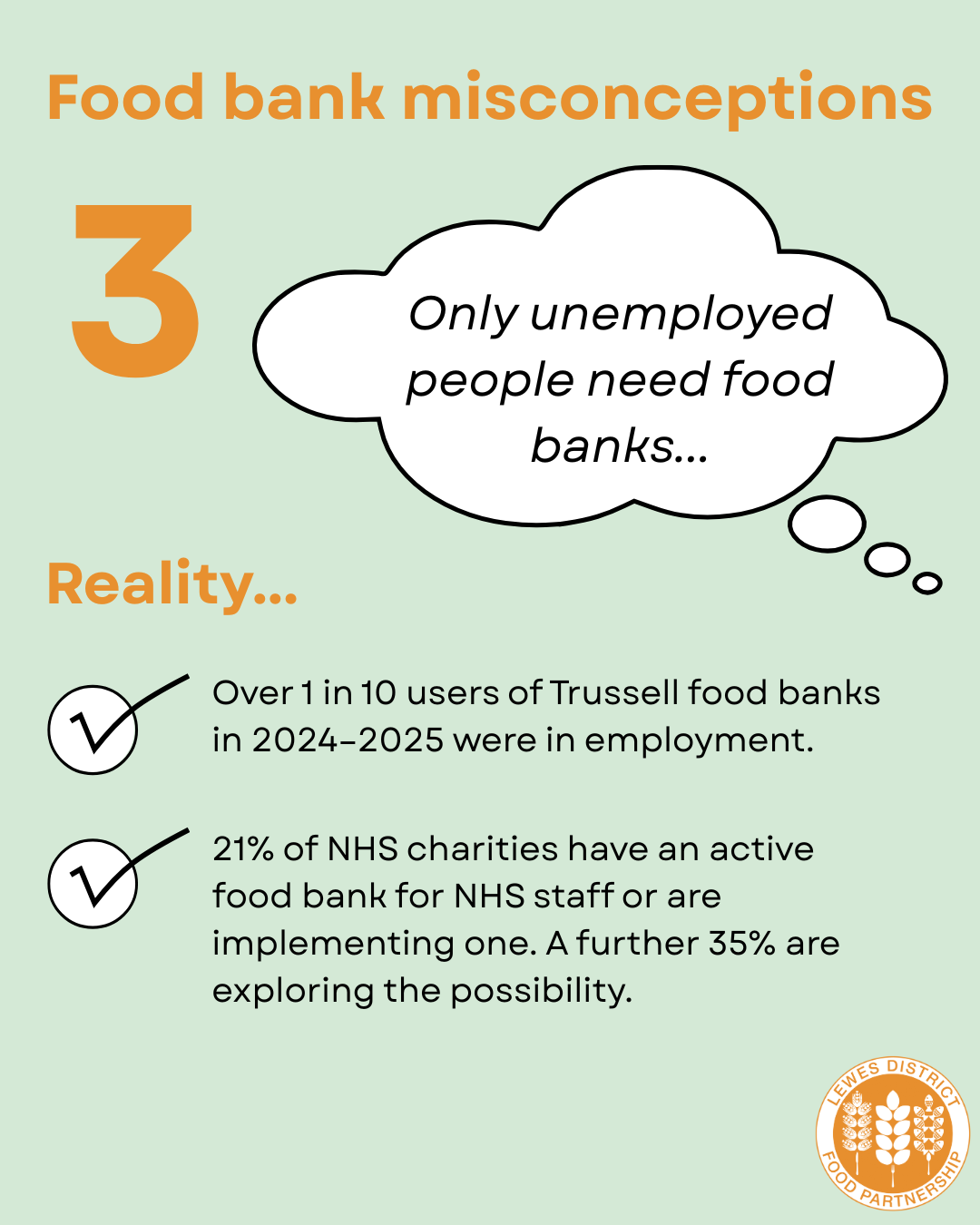
It is a common myth that only unemployed people need food support. In reality, many people who seek help are in work but face insecure hours, zero-hour contracts, or wages that simply don’t cover rising living costs. Others may be dealing with insecure housing, sudden job losses, long-term health conditions and disabilities, as well as having to care for family members, which makes it difficult to work full-time. Unexpected expenses – a broken boiler, a higher-than-expected bill – can push people in to crisis, even if they were managing before.
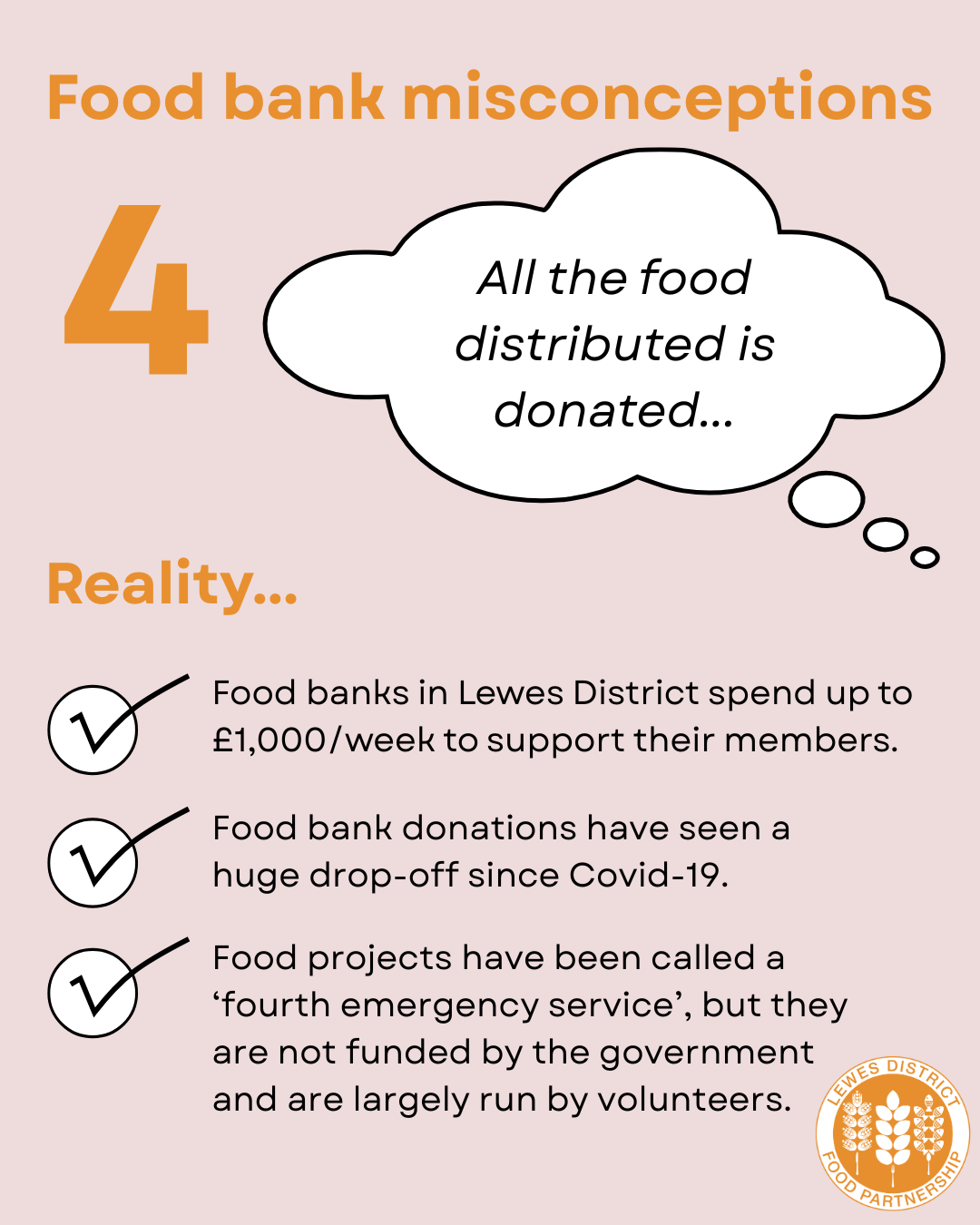
Community food support comes in many forms: food banks; community supermarkets; community fridges. All are heavily dependent on donations. While a ‘Food Bank Day’ can highlight the plight of many in our communities, we urge you to think about the reality of, day-in-day-out, not being able to afford enough food to be healthy and happy and experiencing hunger that limits your potential and ability to engage in society.

In 2023 Lewes District Food Partnership ran a project called ‘Feeling the Pinch’ which heard from residents experiencing food insecurity. Below are some quotes about the realities they face.
“There is constant stress and worry, will I fall too far behind on my rent and become homeless? How will I ever pay off my debts? Can I top up the electric meter this week? What happens if I get ill and how on earth am I going to manage as I get older? The worry is constant.”
“When you’re struggling, your kids have to grow up quicker and they’re more insecure.”
“You learn to be invisible, to be less than yourself.”
This final quote highlights the impact that poverty can have on a person. Feeling like you have lost your identity is a common theme amongst people experiencing food and financial struggles: you lose agency when decisions are made for you and about you, you feel judged when accessing support, and you learn coping mechanisms like “becoming invisible” to deal with the trauma.
This is why groups like The Alliance for Dignified Food Support are so vital, because they ensure that dignity is being embedded in the ways we offer support. Their four key principles are: welcoming, transparent, person-centred and empowering.
Food projects are supported by thousands of volunteer hours, including by people that use the projects themselves. There is a concept called ‘Moral Injury’ that Carl Walker talks about in his paper ‘Managing Hunger Trauma in Community Food Settings’, which explains how those who help run food projects often feel the most conflicted about them: how does it feel to run something you feel shouldn’t have to exist at all? What would happen if food projects closed down? Would the government step in? Right now that feels unlikely, so while we try to campaign for change, the best we can do is to continue to support those who are struggling.
If you would like to make a donation to your local food project, you can find a list here. Please get in touch directly with a food project to make a monetary donation or an offer to volunteer, or you can donate food at many local supermarkets which will be collected by local projects:
- Morrisons in Seaford
- Sainsburys and Lidl in Newhaven
- Lidl, Tesco or Waitrose in Lewes
This blog was written by Ruby Makepeace Somerville, Coordinator at Fitzjohns Food Project in Lewes.
Find out more about your local community food projects on the LDFP website, or see our community food info flyer.
Food Bank Misconceptions: myth vs. reality